
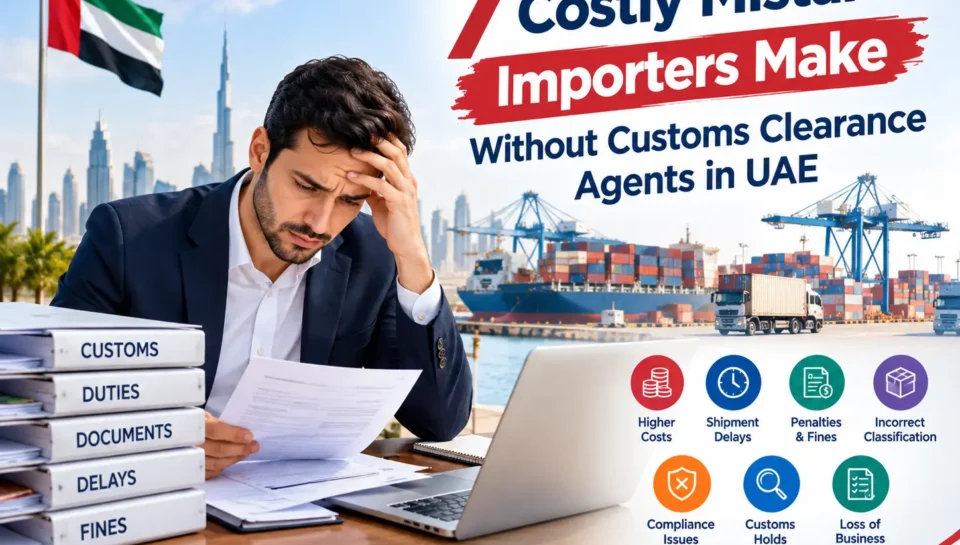
7 Costly Mistakes Importers Make Without Customs Clearance Agents in UAE
Importing goods into the UAE involves more than arranging transportation from one country to another. Importers must manage documentation, customs declarations, cargo classification, approvals, duties, inspections, and shipment coordination. Without experienced customs clearance agents in UAE, even a routine shipment can face avoidable delays and additional costs.
Professional customs support helps businesses handle the customs clearance process in UAE more efficiently while reducing the risk of documentation errors and clearance problems. Here are seven common mistakes importers should avoid.
1. Submitting Incorrect or Incomplete Documents
Documentation errors are one of the most common reasons for customs delays. Import shipments may require documents such as commercial invoices, packing lists, certificates of origin, bills of lading or air waybills, and other documents depending on the cargo.
Missing information, inconsistent quantities, incorrect descriptions, or document discrepancies can lead to additional checks and delays.
Experienced customs clearance services in UAE help review shipment documentation and coordinate the required paperwork before submission.
2. Misclassifying Imported Goods
Every imported product needs an appropriate customs classification. The classification can affect applicable duties, restrictions, approvals, and documentation requirements.
Using an incorrect classification may result in incorrect duty calculations or additional scrutiny from customs authorities. Importers should therefore ensure that product descriptions and classifications are accurate before submitting a declaration.
A professional customs clearance company in UAE can help businesses prepare the information required for the declaration and reduce avoidable classification issues.
3. Underestimating Customs Duties and Other Charges
Importers sometimes focus only on the purchase price and transportation cost without considering the additional expenses involved in bringing goods into the UAE.
Depending on the shipment, costs may include:
- Customs duties and applicable taxes
- Port or terminal charges
- Storage fees
- Inspection-related costs
- Documentation and handling charges
- Demurrage or detention charges
Understanding the potential costs in advance helps businesses plan their import budgets more accurately.
4. Delaying Customs Documentation
Timing matters in import customs clearance in UAE. If documents are not prepared or submitted on time, cargo may remain at a port, airport, or customs facility longer than expected.
These delays can create additional storage or handling expenses and may also affect delivery schedules.
Importers should prepare the necessary documents before the shipment arrives and maintain clear communication between suppliers, freight forwarders, and customs representatives.
5. Ignoring Product-Specific Approvals
Not every product follows the same clearance requirements. Certain goods may require additional approvals, permits, certificates, or compliance documents before they can be cleared.
Importers who do not identify these requirements early may discover a problem only after their shipment reaches the UAE.
This is why businesses should review product-specific requirements as part of their import planning rather than waiting until the cargo arrives.
6. Poor Coordination Between Freight and Customs Clearance
Freight transportation and customs clearance are closely connected. When shipping arrangements, documentation, and customs procedures are handled separately without proper coordination, communication gaps can occur.
For example, incorrect shipment details or delayed documents can affect the clearance timeline and final delivery. Customs clearance agents in UAE can help coordinate with freight forwarders and other parties to ensure that shipment information and required documents are properly aligned.
Using freight forwarding and customs clearance in UAE through coordinated service providers can make communication easier and provide better visibility across the shipment process.
7. Trying to Handle Complex Shipments Without Professional Support
Small or straightforward shipments may appear easy to manage independently, but complex imports can involve multiple documents, regulatory requirements, transportation arrangements, and customs procedures.
A professional clearance partner understands the practical requirements involved in UAE customs clearance and can help identify potential issues before they become costly problems.
For businesses regularly importing cargo, professional import clearance services in UAE can save valuable time and help maintain a more predictable logistics process.
How Can Importers Avoid These Costly Mistakes?
The best approach is to prepare before the shipment arrives. Importers should:
- Verify all commercial and shipping documents.
- Confirm the correct product classification.
- Understand applicable duties and charges.
- Check whether special approvals are required.
- Share accurate shipment information with the clearance team.
- Coordinate customs and transportation arrangements.
- Track the shipment and respond quickly to documentation requests.
Professional customs clearance services can support businesses throughout these steps and help reduce avoidable clearance problems.
Why Work With Al Sahel Cargo & Clearing LLC?
Al Sahel Cargo & Clearing LLC supports businesses with cargo movement, customs clearance, freight forwarding, and related logistics requirements in the UAE. With proper coordination between documentation, transportation, and clearance procedures, importers can manage shipments more efficiently.
If your business is planning an import shipment, working with experienced customs clearance agents in UAE can help you avoid common documentation, coordination, and delay-related problems.
Contact Al Sahel Cargo & Clearing LLC to discuss your upcoming shipment and customs clearance requirements.
Conclusion
Successful importing depends on more than moving cargo from the supplier to the UAE. Accurate documentation, correct classification, timely clearance, proper approvals, and effective coordination can all affect the cost and delivery time of a shipment.
The seven mistakes discussed above can often be avoided through better preparation and professional support. For businesses handling regular or complex imports, working with experienced customs clearance agents in UAE can make the process more organized and predictable.
For reliable Logistics and Freight Forwarding UAE services, customs clearance, and cargo support, Al Sahel Cargo & Clearing LLC can help businesses coordinate their logistics requirements from shipment planning through clearance and final delivery.
I’m Sajeena Kadir, Procurement Manager at Al Sahel Cargo & Clearing LLC, a trusted name in cargo and logistics services. With 18 years of experience at Al Sahel, I bring extensive knowledge of procurement, logistics, and supply chain operations. I’m passionate about efficient sourcing, reliable business solutions, and sharing valuable insights from the logistics industry.
Al Sahel Cargo & Clearing LLC
Frequently Asked Questions
What does a customs clearance agent do in the UAE?
A customs clearance agent helps importers manage the procedures required to clear goods through customs. This can include document preparation, customs declarations, coordination with relevant parties, and assistance with clearance-related requirements. Customs clearance agents in UAE can also help businesses navigate the clearance process more efficiently.
Why can customs clearance take longer than expected?
Clearance may take longer because of incomplete documents, incorrect shipment information, product-specific approvals, inspections, classification issues, or delays in responding to customs requirements.
What documents are generally required for import clearance?
Common documents may include a commercial invoice, packing list, bill of lading or airway bill, certificate of origin, and other permits or certificates depending on the type of goods and applicable requirements.
Can customs clearance delays increase import costs?
Yes. Delays can potentially result in additional storage, handling, demurrage, detention, or other shipment-related charges. Preparing documents correctly and coordinating clearance early can help reduce avoidable delays.
Do all imported products have the same customs requirements?
No. Requirements can vary depending on the type of goods, their origin, destination, classification, and applicable regulations. Certain products may require additional permits or approvals.
When should importers start preparing for customs clearance?
Importers should ideally prepare documentation and check applicable requirements before the shipment arrives. Early preparation gives businesses more time to correct errors or obtain additional documents if needed.
Is customs clearance part of freight forwarding?
Customs clearance and freight forwarding are related but distinct logistics functions. Freight forwarding focuses on arranging cargo transportation, while customs clearance deals with the procedures required for goods to legally pass through customs.