LCL vs FCL Shipping: Which Is the Right Choice for Your Cargo?
Choosing the right sea freight method can significantly affect shipping costs, delivery schedules, and cargo handling. Businesses importing or exporting goods often compare LCL vs FCL Shipping to determine whether sharing a container or booking an entire container is more suitable for their shipment.
LCL (Less Than Container Load) and FCL (Full Container Load) are two common ocean freight options. Each serves different cargo volumes, budgets, and operational requirements. Understanding how these methods work helps businesses make informed shipping decisions and avoid unnecessary expenses. Businesses can also explore Land Freight Services in UAE when road transportation is a suitable option for their cargo movement.
This guide explains the differences between LCL and FCL, their advantages, cost factors, and how to select the right option for your cargo.
What Is LCL Shipping?
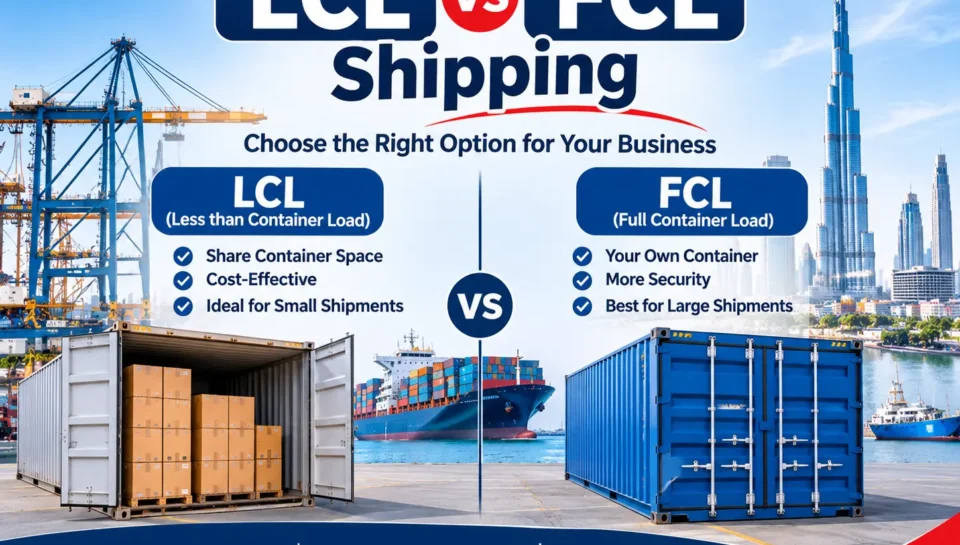
LCL shipping allows multiple businesses to share space inside one shipping container. Each shipper pays for the portion of container space occupied by their cargo rather than booking the entire container.
This option is particularly useful for small shipments that do not require a full container. Through Less Than Container Load Shipping, businesses can transport smaller quantities without waiting to accumulate enough goods to fill a container.
How LCL Shipping Works
- Cargo is collected from the shipper and transported to a consolidation warehouse.
- Shipments from different businesses are combined into one container.
- The container is transported to the destination port.
- Cargo is separated at a destination warehouse and delivered to the respective recipients.
LCL Shipping Services in UAE can help businesses coordinate consolidation, documentation, customs clearance, and delivery arrangements.
What Is FCL Shipping?
FCL shipping means one shipper books an entire container for their cargo. The container may not be completely full, but the booking is dedicated to that shipment.
Full Container Load Shipping is often suitable for large shipments, bulky goods, or cargo that benefits from fewer handling stages. FCL Shipping Services in UAE can coordinate container booking, transportation, and related shipping arrangements.
How FCL Shipping Works
The container is allocated to one shipment, loaded with the shipper’s goods, and transported to its destination. Depending on the arrangement, loading may take place at the shipper’s premises or a designated facility.
Because the container is not shared with other shipments, cargo generally avoids the consolidation and deconsolidation stages associated with LCL.
LCL vs FCL Shipping: Key Differences
|
Factor |
LCL Shipping |
FCL Shipping |
|
Container space |
Shared with other shipments |
Dedicated to one shipper |
|
Best suited for |
Small cargo volumes |
Large or container-sized shipments |
|
Pricing |
Based on shipment volume or weight and applicable charges |
Usually based on container booking and related charges |
|
Handling |
More consolidation and separation |
Fewer handling stages |
|
Transit time |
May take longer due to consolidation |
Often more predictable, depending on route |
|
Cargo privacy |
Shared container |
Dedicated container |
Neither option is automatically cheaper or faster. The right choice depends on cargo dimensions, route, schedule, handling requirements, and total logistics costs.
What Affects LCL vs FCL Freight Costs?
LCL vs FCL Freight Costs depend on several factors beyond the basic ocean freight rate.
- Cargo volume and weight: LCL charges commonly depend on shipment measurements and weight. FCL pricing generally depends on container type, size, and route.
- Origin and destination: Port charges, local handling, and delivery distances affect the total cost.
- Customs and documentation: Clearance fees, inspections, and documentation requirements may add expenses.
- Cargo characteristics: Fragile, hazardous, temperature-sensitive, or oversized goods may require specialized arrangements.
- Additional services: Warehousing, insurance, packing, and door-to-door delivery can affect the final quotation.
Compare the complete shipping cost rather than looking only at the advertised ocean freight rate.
How to Choose the Right Shipping Method
Consider these practical steps before booking:
- Measure your cargo: Calculate the shipment’s total volume, weight, and dimensions.
- Check your delivery deadline: Allow for consolidation, port handling, and customs procedures.
- Compare complete quotations: Include origin charges, destination charges, and delivery costs.
- Review cargo requirements: Consider security, packaging, and handling needs.
- Consult a freight forwarder: Request advice based on your route, shipment size, and delivery destination.
For smaller consignments, LCL may provide a practical solution. For larger shipments, FCL may offer better value and greater control over container handling.
Conclusion
Selecting between LCL and FCL requires balancing cargo volume, budget, delivery timelines, and handling requirements. LCL is useful for smaller shipments that benefit from shared container space, while FCL can be more suitable for larger consignments requiring a dedicated container.
Businesses comparing LCL vs FCL Shipping should evaluate the complete logistics cost and service requirements before making a booking. Al Sahel Cargo & Clearing LLC provides sea freight support, freight forwarding, and customs clearance coordination to help businesses manage cargo movements efficiently.
Contact Al Sahel to discuss your shipment requirements and request a suitable sea freight quotation.
+971 55 863 5933 | info@alsahelgroup.com | or www.alsahelgroup.com.
I’m Sajeena Kadir, Procurement Manager at Al Sahel Cargo & Clearing LLC, a trusted name in cargo and logistics services. With 18 years of experience at Al Sahel, I bring extensive knowledge of procurement, logistics, and supply chain operations. I’m passionate about efficient sourcing, reliable business solutions, and sharing valuable insights from the logistics industry.
Al Sahel Cargo & Clearing LLC
Frequently Asked Questions
Is LCL cheaper than FCL?
LCL can be more economical for smaller shipments because businesses pay for the space they use. However, as cargo volume increases, the total LCL charges may approach or exceed the cost of booking an entire container.
When should I choose FCL shipping?
FCL is worth considering when your cargo occupies a substantial portion of a container, requires dedicated space, or benefits from fewer handling stages. Compare the full quotation before deciding.
Does LCL shipping take longer than FCL?
LCL may take longer because shipments need to be consolidated and separated at warehouses. Actual transit time depends on the route, sailing schedule, customs clearance, and destination handling
Can I ship fragile goods using LCL?
Yes, but proper packaging and protection are essential because LCL cargo undergoes additional handling. Discuss special handling requirements with your freight forwarder before booking.
What documents are required for sea freight?
Common documents include a commercial invoice, packing list, and bill of lading. A certificate of origin, permits, or other documents may be required depending on the cargo and destination.
Can LCL and FCL shipments include door-to-door delivery?
Yes. Both shipping methods can be arranged with door-to-door services, depending on the route and provider. Confirm pickup, customs clearance, and final delivery charges in your quotation.